

Table of Contents
- Assess Your Financial Situation
- Research and Compare Vehicles
- Check Your Credit Score
- Get Pre-Approved for a Loan
- Consider Buying Used
- Test Drive and Inspect the Vehicle
- Negotiate the Price
- Review the Contract Thoroughly
- Driving Forward with Confidence
Key Takeaways
- Understand your total budget, including any hidden costs such as insurance and maintenance.
- Research thoroughly and compare multiple vehicles and financing offers.
- Get pre-approved for a loan to strengthen your negotiation position.
- Consider the value and benefits of certified pre-owned vehicles.
- Never skip test driving and independent inspections for used cars.
- Take time to review contracts and ask questions about unclear terms or fees.
Buying your first car is both an exciting milestone and a significant financial decision. For many, it symbolizes freedom and independence, but navigating the choices, negotiations, and financial details can feel daunting. By following a thoughtful and organized approach, you can confidently drive away with a vehicle that meets your needs and budget. If you are looking to begin your car-buying journey, learn more about knowledgeable dealerships that can help guide you through each step.
Successful car buying for beginners hinges on thorough research, realistic budgeting, and an understanding of the nuances associated with both new and used vehicles. Taking time with each stage of the process—or reaching out to a professional dealership for advice—can help you avoid common pitfalls and secure a deal you feel great about.
1. Assess Your Financial Situation
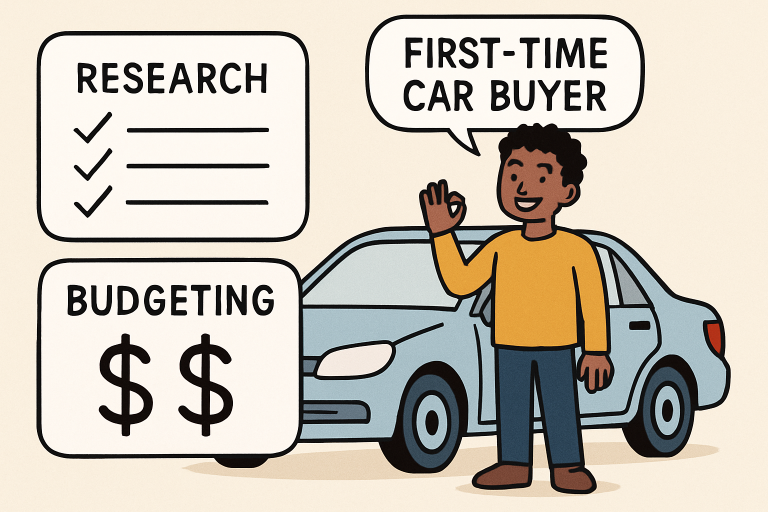
Before browsing car listings, take a close look at your current financial position. Factor in not only the down payment and monthly car payments, but also recurring costs such as insurance premiums, gas, maintenance, and unexpected repairs. Experts typically recommend car payments remain below 15% of your net monthly income to maintain overall financial well-being. For a more in-depth look at creating a car-buying budget, CNBC Select has a comprehensive guide.
You may also want to set aside an emergency fund specifically for car-related expenses, ensuring you’re prepared for any unexpected costs. Taking the time to plan your finances thoroughly can help you shop with confidence and avoid future financial strain.
4. Get Pre-Approved for a Loan
INCLDUE Arriving at the dealership with pre-approval from a bank or credit union demonstrates to sellers that you are a serious buyer and provides you with a concrete spending ceiling. This leverage prevents you from settling for dealer financing at unfavorable terms. Before finalizing any agreements, compare available loan offers. You can find additional advice on this process from established outlets like AP News. Arriving at the dealership with pre-approval from a bank or credit union demonstrates to sellers that you are a serious buyer and provides you with a concrete spending ceiling. This leverage prevents you from settling for dealer financing at unfavorable terms. Before finalizing any agreements, compare available loan offers. You can find additional advice on this process from established outlets like AP News.
5. Consider Buying Used
Buying used, especially a certified pre-owned (CPO) car, can offer significant savings without sacrificing reliability. New cars depreciate rapidly—losing up to 20% of their value within the first year—while CPO vehicles undergo rigorous inspections and come with manufacturer-backed warranties for added peace of mind. The CPO program helps bridge the gap between budget and reliability, making it ideal for first-time buyers.
6. Test Drive and Inspect the Vehicle
No matter how reputable the seller or the vehicle report, always schedule a test drive to gauge firsthand how the vehicle handles, brakes, and rides under real-world conditions. For used vehicles, check the car’s history with services such as Carfax and hire a trusted mechanic to inspect the car before purchase. This step helps uncover hidden issues, such as previous accidents, flood damage, or major maintenance problems.
7. Negotiate the Price
Most car prices, as displayed on the sticker, are open to negotiation. Research the fair market value of the vehicle and use this information to your advantage in price discussions. Focus on negotiating the overall sale price, rather than just the monthly payments, to avoid unnecessary long-term interest or hidden fees. Be prepared to walk away if terms aren’t favorable, and don’t let pressure sway you into accepting add-ons or warranties you don’t need.
8. Review the Contract Thoroughly
Before signing any agreement, carefully read the entire contract and make sure every discussed term is reflected accurately—this includes the sale price, interest rate, loan term, and any warranties. Watch for unnecessary extras or hidden fees that may have been tacked on without your consent. If questions arise, don’t hesitate to pause the process and seek clarification or professional advice before moving forward.
Purchasing your first car can be seamless with the right strategy: take your time, rely on trusted resources, and never underestimate the benefits of working with an experienced dealer. With thorough planning and research, you can be confident in making a smart and satisfying purchase.
Driving Forward with Confidence
Purchasing your first car is more than just a transaction—it’s a commitment to your financial future, personal safety, and everyday convenience. By combining diligent research with careful budgeting and informed decision-making, you set yourself up for a rewarding ownership experience.
Whether you choose a new or certified pre-owned vehicle, the key is to approach the process with patience and clarity. Test drives, independent inspections, and honest negotiations help ensure you get the most value for your money. Partnering with a reputable dealership can also provide expert guidance, making each step easier to navigate.
With the proper preparation, you can drive away not only with a vehicle that fits your lifestyle, but also with the confidence that you made a wise, sustainable choice—one that will serve you well for years to come.
