

Key Takeaways
- Get emergency help or medical care before trying to document the scene.
- Report the injury promptly to a supervisor, foreman, or employer.
- Take photographs and identify witnesses if it is safe to do so.
- Save medical records, wage information, and jobsite-related communications.
- Workers’ compensation and a claim against another responsible party can be separate issues.
- Deadlines can affect a claim, so waiting can create avoidable problems.
Construction work helps shape Pennsylvania communities, from Philadelphia redevelopment projects and suburban housing sites to bridge repairs and utility work across the Commonwealth. But a serious jobsite accident can leave a worker and family facing urgent medical decisions, missed paychecks, and uncertainty about what comes next. Speaking with a construction accident lawyer may help an injured worker understand the possible paths forward while the facts are still available.
Every construction accident is different. A fall from scaffolding, a trench collapse, an electrical injury, a crane incident, or an accident involving a subcontractor can raise different questions about insurance, workplace safety, and legal responsibility. This guide offers practical steps for protecting your health, preserving information, and recognizing when a Pennsylvania construction accident claim may deserve closer review.
Put Safety and Medical Care First
After a construction accident, do not assume an injury is minor simply because you can stand or walk. Falls, head injuries, crush injuries, burns, and back trauma may require prompt evaluation. Call 911 when there is loss of consciousness, severe bleeding, chest pain, breathing trouble, numbness, confusion, suspected fracture, or danger from an unstable jobsite condition.
If emergency treatment is not needed, seek medical care as soon as reasonably possible and explain that the injury happened at work. Give an accurate account of the incident, the equipment involved, and the body parts affected. This helps create a record that connects your symptoms and treatment to the workplace event.
Report the Accident Without Delay
Tell a supervisor, foreman, site manager, or employer about the accident as soon as you can. A verbal report is important, but written documentation is better. Pennsylvania guidance explains that an injured worker should notify the employer within 21 days, and that notice given more than 120 days after the injury may jeopardize workers’ compensation benefits unless the employer already knew of the injury. When you report a job-related injury to your employer, keep a copy of any form, email, or text message you send.
Keep the report factual. Include the date, time, work location, task being performed, people present, equipment involved, and immediate symptoms. Avoid guessing about fault or accepting blame before the circumstances have been reviewed.
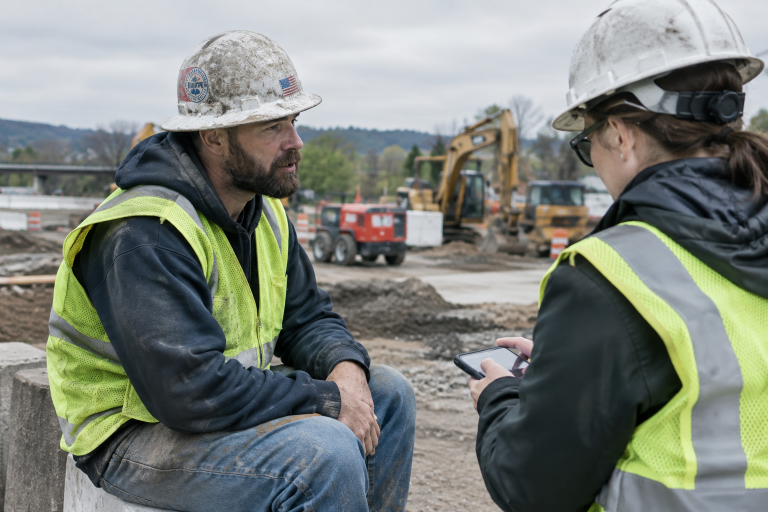
Preserve Jobsite Evidence
Construction sites can change quickly. Equipment may be moved, debris removed, a damaged ladder replaced, or an area closed to workers. If you can do so safely, take photographs or video of the scene, including the wider work area and close details of the condition involved.
Useful evidence may include:
- The ladder, scaffold, lift, trench, tool, vehicle, safety line, or machine is involved.
- Guardrails, warning signs, harness anchor points, lighting, walkways, and ground conditions.
- Your visible injuries, torn clothing, damaged helmet, boots, gloves, or other protective gear.
- Names and contact details for coworkers, subcontractors, or bystanders who saw what happened.
- Daily logs, work orders, text messages, site safety documents, and relevant training records.
Do not return to a dangerous area just to get a better photograph. If you cannot safely gather evidence, ask a trusted coworker or family member to document what they can. Preserve the clothing and equipment you were using in the condition they were in after the incident, rather than washing, repairing, or discarding them.
Understand Workers’ Compensation and Third-Party Claims
Most employees injured on Pennsylvania jobsites look first to workers’ compensation. The system can provide medical and wage-loss benefits for qualifying work injuries, generally without requiring the worker to prove the employer was at fault. It may also apply when a job injury aggravates a preexisting condition.
However, workers’ compensation is not always the only issue. Construction projects often involve general contractors, subcontractors, property owners, equipment rental companies, delivery companies, and manufacturers. When a party other than the injured’s employer may have contributed to the accident, a separate third-party claim may be worth evaluating.
For example, a claim may require closer review when defective equipment allegedly malfunctioned, a negligent driver entered a work zone, a property owner controlled an unsafe area, or another contractor created a hazard. The available evidence, contracts, employment relationships, and insurance coverage can all matter.
Keep a Clear Record of Losses
Organized records can make it easier to understand the practical impact of the injury. Start a folder, whether digital or paper, and update it as treatment continues. Include emergency room records, imaging results, prescriptions, therapy instructions, bills, mileage to appointments, work restrictions, and correspondence from insurers or employers.
Also, save pay stubs, tax documents, and notes showing missed shifts or reduced duties. If the injury affects sleep, household tasks, childcare, mobility, or the ability to perform your usual trade, keep a brief, dated journal. Do not exaggerate. A straightforward account is more useful than trying to predict a claim’s value.
Be Cautious With Recorded Statements and Releases
An insurer or company representative may ask for a recorded statement, broad medical authorization, or quick settlement agreement. Be courteous, but do not guess about facts you do not remember. Do not sign a document that you do not understand, especially if it could affect medical treatment, wage benefits, or the ability to pursue another responsible party.
Construction safety rules cover hazards such as falls, electrocution, struck-by incidents, machinery, excavation, and exposure risks. The federal government’s construction industry safety resources identify many of the hazards commonly encountered on active job sites. A safety violation does not automatically establish a legal claim, but site conditions and safety practices can be important evidence.
Know That Deadlines Matter
Different deadlines may apply to workers’ compensation notices, claim petitions, personal injury lawsuits, and claims involving government entities. Pennsylvania generally provides a two-year limitation period for many personal injury actions, but the correct deadline depends on the specific claim and circumstances. Do not assume that an insurer’s investigation or settlement discussion pauses a deadline.
Questions to Ask After a Pennsylvania Construction Accident
- Have I received a medical evaluation and followed the recommended care?
- Did I report the accident, and do I have proof of that report?
- Who controlled the work area, equipment, and safety procedures?
- Are there photos, witnesses, surveillance footage, or jobsite records to preserve?
- Was another contractor, driver, manufacturer, or property owner involved?
- Has an insurance company asked me to give a statement or sign paperwork?
- Are there deadlines that require prompt action?
Conclusion
A Pennsylvania construction accident can affect far more than a single workday. Prompt medical care, timely reporting, careful preservation of evidence, and organized records can help protect a worker’s options. Taking practical steps early does not guarantee any particular result, but it can make it easier to address the health, employment, insurance, and legal questions that often follow a serious jobsite injury.


